Upbringing and care based on understanding your child’s unique nature
Get a detailed analysis of your child’s uniqueness map:
- what conditions help your child develop, and which ones hinder
- how their natural talents manifest in everyday life
- how to find common ground with them more easily
Learn how simple steps can create a supportive environment for them, which will help:
- unfold their potential
- cope with challenges
- maintain authenticity and self-connection
My recommendations are based on years of experience analyzing Human Design and my experience raising a daughter.
Help your child grow happy and confident.
Help yourself, as a parent, get maximum enjoyment from interacting with your child.
Parenting is not simple
If your child has an even number of eyes and ears, you’re already doing great.
But still, sometimes those little doubts creep in:
- I’m a bad mother/father,
- I’m doing something wrong or not enough
- Is this trait of my child normal? Maybe I should do something about it?
- It’s hard to understand what’s happening with them
- How to establish interaction that suits both of us and doesn’t drain us?
- The teacher insists on their method, but I feel it doesn’t suit my child
- How to balance work and parenting when social media shows perfect parents with simple recipes, but in reality, you don’t have 6 hands and no nannies or grandmothers nearby?
- How to prepare your child for life in a constantly changing world?
- How to teach them to trust themselves?

Sounds familiar?
Parenting is not only joy but also challenges.
But with Human Design, you can:
- better understand your child
- find an approach that suits them specifically
- create a harmonious environment for their development
- enjoy parenting instead of burning out
Human Design is knowledge for children
It can give a comprehensive answer to the question “Who is your child?”
- what is their potential?
- what are their gifts, talents, internal challenges?
- what is the nature of their energy?
- their style of interacting with the world?
And I will help you translate all the depth of this knowledge into a set of simple and clear recommendations for every day.
What happens during the consultation?
Generally speaking, describing such a process is only pleasure-spoiling. Because each session turns out special. Depending on the child’s chart, I emphasize different things. I address you, the parent, considering the optimal way for you to perceive information.
In short, it’s an art, and it cannot yet be algorithmized.
But still, there is some structure:
Step 1. Introduction to the bodygraph (chart) and basics of Human Design
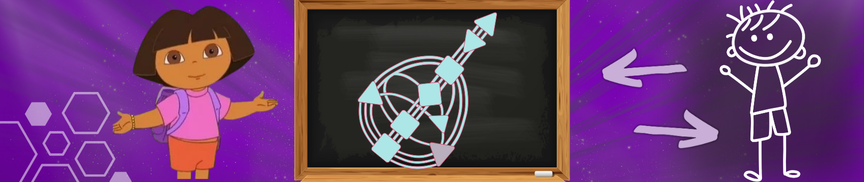
We begin by understanding the basic elements of the chart: what Centers, Channels, Definitions, and Openness are.
What you’ll learn:
— How each part of the chart works and what it means for your child.
Step 2. Type and Inner Authority
Type is the key to understanding your child’s energetic nature. There are 4 types in total: Manifestor, Generator, Projector, and Reflector. You can’t tell by looking, but people of different types differ from each other more than a man from a woman. Different Types are like different cars: they can be electric, diesel, or gasoline. They can be racing cars, city cars, or SUVs. And no one would fuel a diesel car with gasoline, although technically it could drive. Driving with low clearance on dirt roads is possible - but that’s not the best idea either.

Similarly, for each Type, there is a suitable way of treatment specifically for them, just in the case of people, it’s not so obvious. Understanding Type is important for organizing daily routines, selecting activities, setting boundaries, and choosing a communication style with the child.
Inner Authority is a way to make decisions by listening to yourself, not to others’ advice. Different people have different ways.
Example: a child with emotional authority experiences regular mood swings. It’s helpful to teach them not to make spontaneous decisions.
What does good contact with your inner authority provide?

If life is movement, then decision-making is a method of navigation. Decision-making based on inner authority will provide the optimal life trajectory for the child. One where they will meet the right allies, be in the right place at the right time, and be able to fulfill themselves maximally.
Step 3. Analysis of Definitions
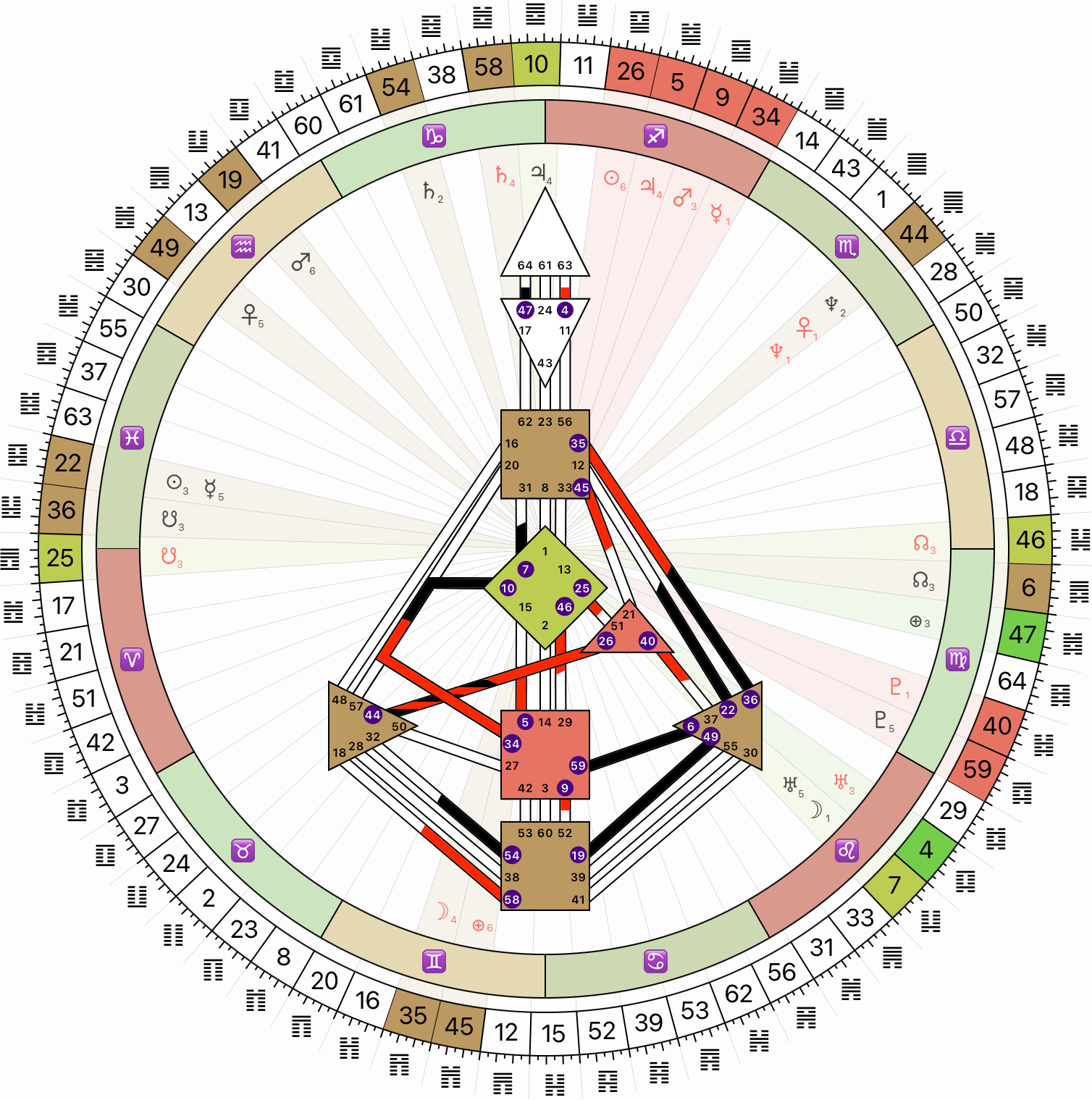
These are all the colored parts in the chart. These qualities are stable and reliable; they will always manifest in your child’s character. By understanding all Definitions, you’ll be able to understand your child on another level.
Example: My daughter has a defined Preservation Channel 27-50. People with such a channel tend to show care for others, and the most basic way of caring is feeding. And when I see how my daughter enjoys feeding birds, us, friends, or watering plants, I know that such activity is not just play but also a manifestation of one of the deep facets of her personality.
Step 4. Analysis of Openness
These are all the white, or uncolored, parts in the chart.
Openness refers to areas where qualities manifest inconsistently and are subject to external influence. These areas easily “absorb” the moods, thoughts, and energies of other people.
Example: a child with an open Emotional center reads the family’s mood like a scanner and begins to behave in unison with those around them.
Knowing about Openness, you can help develop awareness in your child: where they are authentic and where they are subject to external influence. We’ll discuss how to teach them to use their openness beneficially and not lose themselves in others’ “programs.”
Step 5. Analysis of Profile
Profile is the style in which the child interacts with the world.
What is a profile? It’s a unique perspective in which the child:
-
perceives others (“How do I see people?”)
-
perceives themselves in the eyes of others (“How do they see me?”)
-
chooses ways to learn, make friends, solve problems.
Profile is like a role in a game. Some children like to be “researchers” (observe, analyze), others - “experimenters” (act, try, make mistakes). These roles are visible in everyday life: in games, studies, communication.

Understanding your child’s profile will help:
- not to break their natural style
- find keys to learning and communication that work specifically for them
Step 6. Brief overview of your chart
Human Design is about helping your child remain themselves. And it will be difficult for you to do this if you yourself are not acting naturally. There’s so much “propaganda” and “role models” of ideal parenting around.
Some drag their children on hikes or put them on skis from age one,
some are obsessed with all kinds of “developmental activities,”
some play with their child more actively than the child themselves,
and others contain every emotion like a therapist with 20 years of experience.

And it looks so attractive from the outside.
But you cannot and should not be a universal soldierparent and reproduce all models on yourself.
Therefore, we definitely analyze your chart as well to understand what kind of parent is natural for you to be.
Step 7. How parent and child charts interact
We look at where your charts complement each other and where there might be tension points. This helps understand how to avoid conflicts and build relationships where everyone remains themselves.
Summary and materials

You’ll receive an audio recording of our conversation and an infographic with the main recommendations that can be hung on the refrigerator or passed to grandmother and nanny.
How does the consultation process work?
First, we have a brief 10-15 minute call. You can formulate a specific request if needed. I’ll ask questions to get an idea of your situation and context. This is important to establish personal contact, understand if we’re a good fit for each other, and ensure that the work will be as effective as possible. We agree on a date, you make a prepayment, I begin preparation (takes 3-4 days).
The consultation itself takes place online and lasts 2-3 hours. If desired, we can split it into 2 sessions. If you’re in Berlin, I prefer in-person meetings.
After completion
of the consultation, you will not only have:
- comprehensive understanding of your child at a new level
- understanding of the mechanics of your interaction with them
- a set of practical advice on how to take this into account in life
- an A4 format infographic summary
- audio recording of our conversation
But also confusion in your head, yes, that can also happen. Parents usually need some time to
- digest new knowledge
- integrate it into their daily life

This is normal and expected. But you can start applying new knowledge right away. Young children respond quickly when you address their true nature, and you’ll be able to see that. Raising a child considering their design is not a teleport to a point of grace. But a road, a kind of el camino, which takes time but gives small discoveries every day.
Reviews

Want to try?
As it happens, I have a main job (I’m a programmer), so my capacity is limited. At the moment, I can take no more than 6 people a month for consultation. Only 2 spots left for April.
Currently, the cost of such a consultation is just 150 euros, but lately, the demand for my work has begun to grow rapidly, and I see what value it has for parents, how amazingly it changes the lives of their children. Therefore, I decided that I will gradually increase the cost to maintain quality and attention to each client.
Basically, you now have 2 options: you can simply close this page and go about your business, which is absolutely normal; no one will die from this. But it’s important to understand that in this case, the child will grow, develop, and live just “at random,” like 99% of people.

Or you can invest 150 euros once and get a full roadmap, following which your child will be able to realize their full potential 100%. Essentially, it’s the price of a family dinner at a good restaurant. Only dinner will be forgotten in a few days, while the asset I offer will never be forgotten)
After all, children are the most precious thing we have. And if there’s an option to dramatically transform your child’s life for the price of a restaurant visit, why not take advantage of this option.
Think about it at your leisure)